
Circular by Nature — The Voices from 2025 Who Are Shaping Our Future
Part Three: What’s Being Reshaped to Enable the Implementation of a Circular Economy — The Key Changes for Industry, Metrics, and Investments


A Making Circularity Work series sharing key insights from the World Circular Economy Forum 2025
Circularity: A shift in how we better our economies.
We’ve been reflecting on what we heard from the 1200+ leaders at the World Circular Forum this year, and how our perspectives influenced what we heard: Louise’s background in economics and design, Samantha’s in ecology and food systems.
We are united by our shared belief that circularity is most powerful when designed together, and it is a strategy for reconnection between ourselves, nature and the systems that govern us.
One of the biggest aha moments has been this:
It’s easy to think of circularity as a technical shift - new materials, new loops, new models, but circularity is also deeply relational.
The relationships, connections, and how we choose to care for ourselves, each other, our quality of life, and the environments that surround us.
This is the space between systems, industries and place. It is also the stories and practices behind the data and metrics by which we hold ourselves accountable.
We are seeing Brazil leading this approach, and fast becoming a global epicentre with a clear and deliberate strategy to prioritise social capital uplift to unlock environmental and economic regeneration.
By addressing the disconnection and power struggles that hold complex problems in place, they are bringing finance, policy, leadership and impact metrics into alignment across and within systems to unlock new kinds of value for communities, SME’s and Innovators.
At the heart of the circular solutions we saw was the intentional design for social capital uplift. Often overlooked to keep invested interests happy, yet ultimately shifts the economy and circularity to the areas that need it the most.
We heard first-hand that for developing nations, the circular economy does not just exist to improve recycling or waste management. Its true value is unlocked by fundamentally reshaping how we define value, leadership, and progress.
But the old system is still holding on to established practices and behaviours.
That's why reshaping finance, policy, taxonomy, and ESG metrics can powerfully activate system-wide shifts away from the reliance on extractive industries, unquestioned growth, and externally dictated economic models.
Most often, this requires an attitude of letting go.
In Donella Meadows’ words:
“.. throwing yourself into the humility of Not Knowing. In the end, it seems that power has less to do with pushing leverage points than it does with strategically, profoundly, madly letting go.”
Brazil and the Global South are exemplifying this letting go - letting go of old financial systems and norms, political blindspots and leadership models that hold our existing problems in place.
Our Invitation to you
On a personal note, what we love most about this work is how the smallest shifts can create the biggest changes.
So often, we think we need to push harder or do more…but real transformation happens when we slow down, tune in and address the root causes of these challenges we face together.
I invite you to tune in, reflect and share what you’re seeing, where you are stuck and consider how you might shift the system you operate in towards better outcomes.
Read on to learn more about what we are seeing as the global shift in finance, metrics, policy and leadership, with an invitation to join us to launch our Circular by Nature report at COP30.
I’d love to hear from you.
Let’s get into it!
1. Reshaping Finance: From ROI to Regeneration
Finance is slowly but unmistakably evolving.
The old model of “return on investment at all costs” is being challenged by models that prioritise regeneration, resilience, and social good.
Blended finance and catalytic capital are gaining traction - with many examples named, like the Agri-Business Capital (ABC) Fund (Initiated by IFAD with an initial $9 million investment) which directs blended capital toward underserved agricultural value chains (e.g., cocoa) and supports small-scale farmers, rural SMEs, and producer organizations, absorbing early losses via multilateral investors to de-risk the fund and attract more conventional investment.
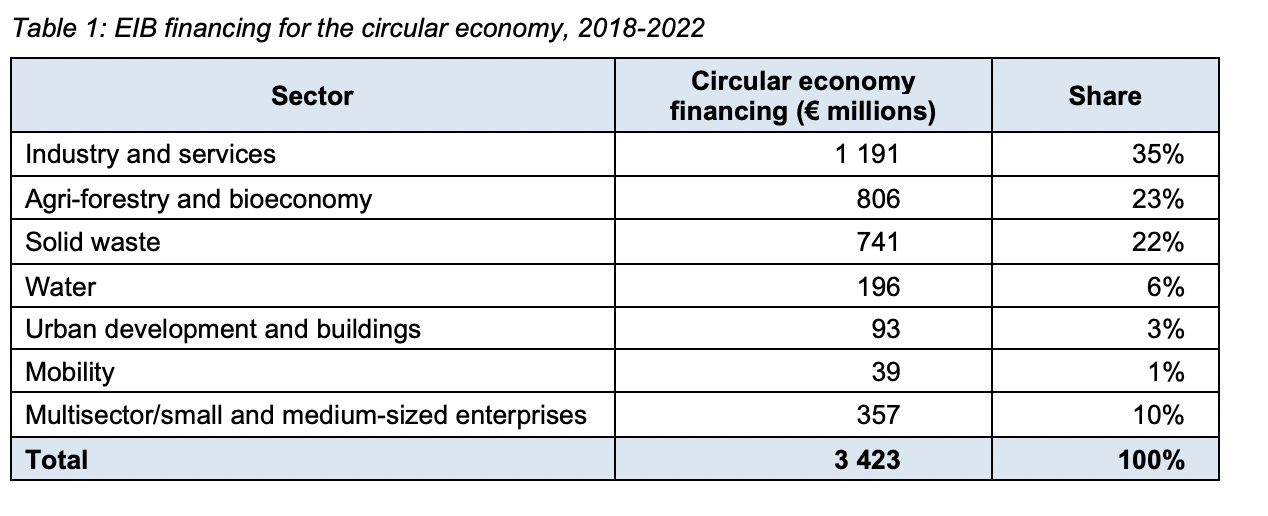
If you thought global circular economy investment only went to recycling and waste solutions, you are missing the biggest opportunity for your industry to evolve. A good indicator is the industries the European Investment Bank is investing in: 35% in industry and services, 23% in Agriforestry and Bioeconomy. Both are getting more investment than solid waste. Notably 10% is in multisector/small and medium-sized enterprises.
Banking Institutions are coming together to create and update Circular Economy Finance Guidelines to ensure there is consistency in approach and measurement of success.
Yet the full potential of blended finance and catalytic capital remains untapped - held back not by supply, but by the lack of businesses and industries able to demonstrate integrated benefits to social and environmental capital in their project financing requests.
“The better prepared businesses are to present an environmental and social case, the better able we are to finance it.”
- Development Bank Panelist
Banks like the Inter-American Development Bank and African Development Bank share frameworks to unlock sustainable credit, but stress the need for businesses to demonstrate measurable environmental, social, and economic value.
The banks are ready and waiting to realise these opportunities.
Many banks also showed willingness to do the groundwork to define environmental and social capital outcomes on behalf of businesses - signalling new ways forward.
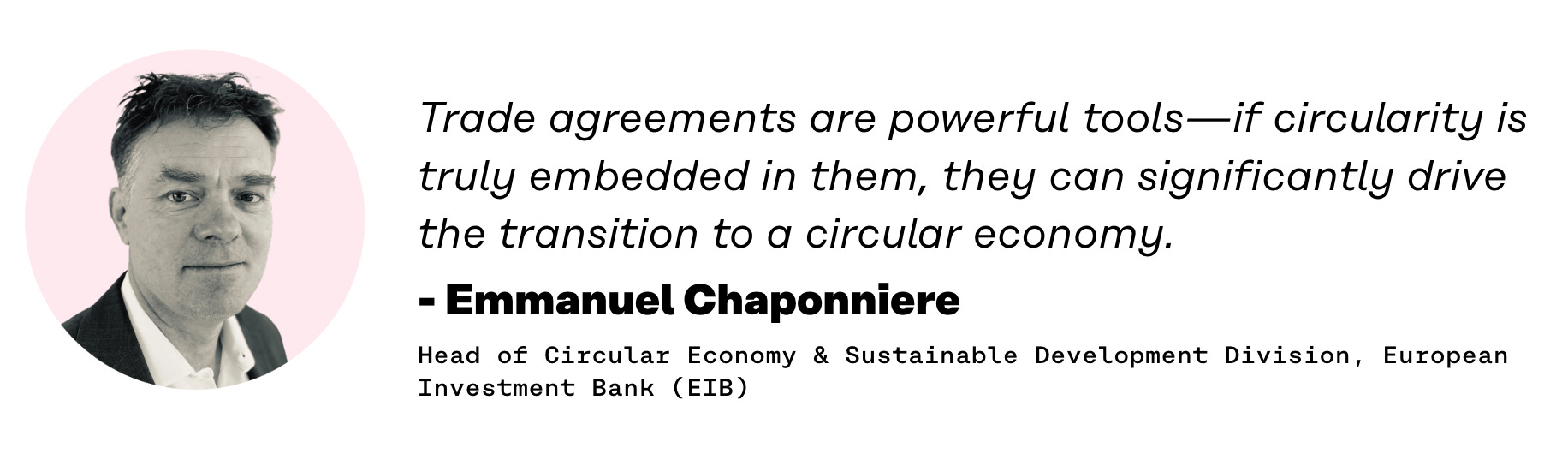
Trade is the new frontier for circularity.
We were aware of closed-door discussions with China, Africa and Brazil present. Renewables were front of mind with consideration for how these nations can realise the value within regions for things like lithium extraction and grow markets for secondary materials to increase their use.
Which takes us to our next major shape - impact metrics.
2. Reshaping Impact Metrics: Beyond Material Tonnes and Carbon
The Global Circularity Gap 2025 report was launched at WCEF2025, and it was incredible to hear this firsthand from Circle Economy.
However, it was not good news.
We have seen a further decline in material circularity.
But let us consider that there is another lens to this data beyond the tonnes to understand the decline and map a path forward to increase circularity.
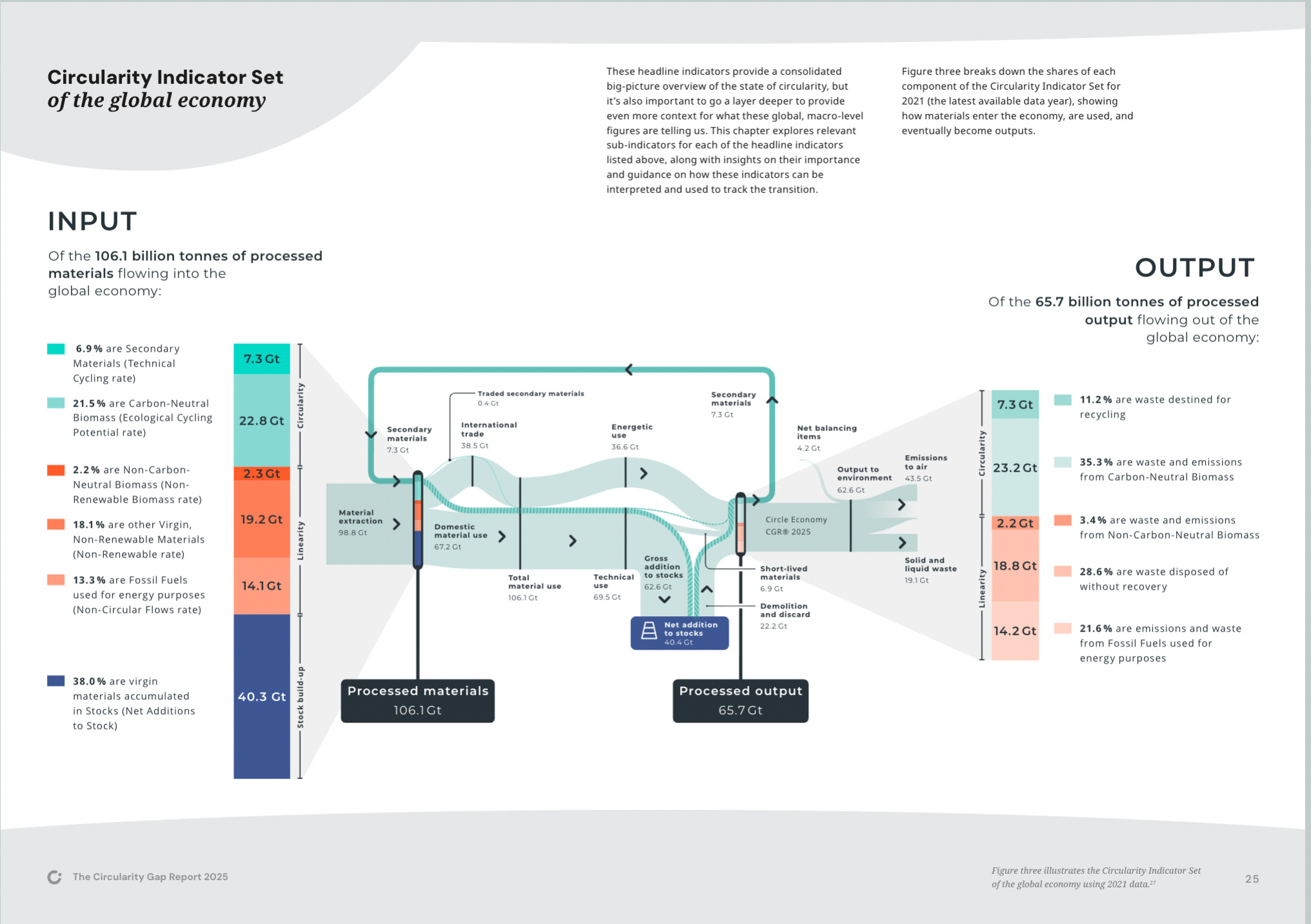
What are we not seeing in this demonstration of the flows of materials throughout the world?
What is holding these problems in place?
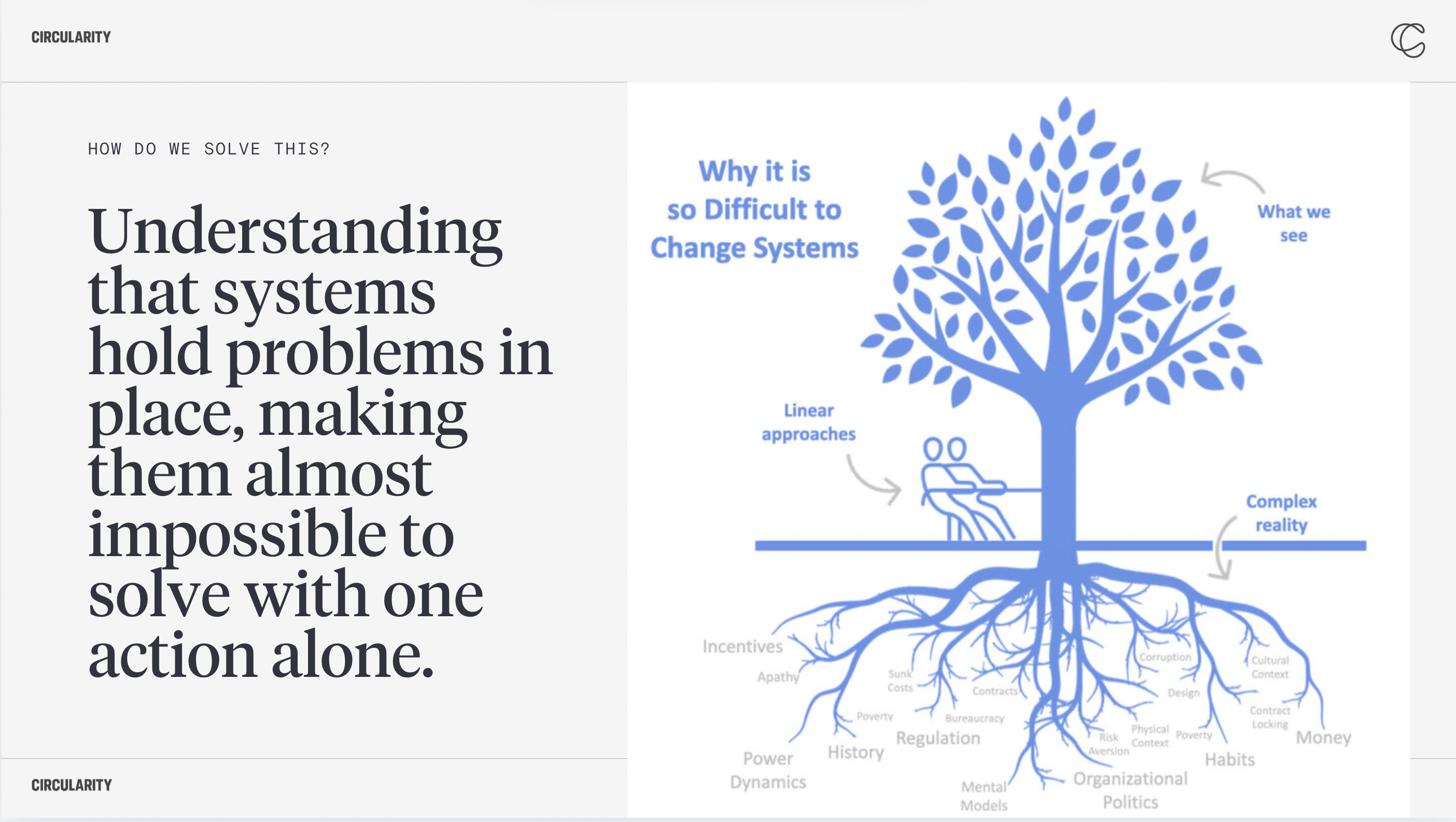
The complex reality of these challenges is the relational - people, the communities, the power imbalances, the unpaid workers, the contracts and who holds the pen. The roots beneath the tree that we can’t get to when we try to pull from the top.
And that’s what we heard at WCEF2025: social and environmental capital are interconnected. It’s both, not one of. There’s a growing push to shift away from measuring circularity by tonnes or carbon alone, toward metrics that capture wellbeing, resilience, equity, and ecosystem health.
Narratives are shifting to reflect both the individual and the community in enabling circularity and regeneration.
Our role(s) in the system are changing, and being reflected in how we describe and design for ourselves:
From farmer to teacher
From consumers to custodians.
From efficiency to sufficiency.
From product to relationship.
Digital tools promise transparency and trust but raise questions about surveillance and equity - a line to be walked with intention and care.
We are already seeing this shift in our work across the food system, and in the examples we shared in our previous article, where circularity is lifting communities. Read more here: https://makingcircularitywork.substack.com/p/circular-by-nature-the-global-voices-dae
And we have seen the value of something as simple as collecting anonymous data across Kiwifruit Packhouses to enable the funding required to shift from linear to circular use of refrigerants in Aotearoa, New Zealand. Something that was not previously possible.
3. Reshaping Policy: From Restricting Circularity to Enabling
To create the system conditions for change, policy is shifting from a “stick” to a “carrot.”
Brazil’s National Circular Economy Strategy (ENEC), Solid Waste Policy, Low-Carbon Agriculture Plan and National Circular Economy Plan (PLANEC) have all been introduced to create enabling conditions for innovation, collaboration, and new business models.
The National Circular Economy Plan (PLANEC) was approved on May 8, 2025, to build on the ENEC with a robust roadmap: 71 actions across five strategic pillars:
Regulatory and institutional groundwork
Innovation, culture, education
Resource efficiency and waste management
Financial instruments and sustainable procurement
Social inclusion, intergovernmental alignment, and decent work
The Plan was shaped through wide public consultation (over 1,600 contributions) and was launched alongside WCEF2025 in São Paul.
Yet, there remains a need to ensure that the intended improvements to social capital through these policies are upheld, with calls for further embedding of just transition principles to ensure no one is left behind.
“Brazil’s circular strategy must embed just transition principles to realise its promise.”
- Policy session participant“Business models can evolve without cutting off the current system. We must hold both.”
- WBCSD panelist
For other economies grappling with recessions, unemployment, rising material costs and increasing trade tariffs: a robust circular economy plan can enable a system-wide shift that addresses the root causes (inequality, extraction, nature decline, unpaid workers, cultural degeneration).
4. Reshaping Leadership: Becoming Plural
The forum highlighted new leadership forms - deeply local, often feminine, and grounded in care.
Civil society coalitions, local cooperatives, and Indigenous governance systems are pushing beyond traditional power centres.
Young leaders, Indigenous thinkers, and grassroots innovators called for relational leadership:
“We need leadership that emerges through relationships, not appointments.”
This relational leadership echoes Meadows’ notion of letting go - releasing the need for individual control to create space for emergent, collective wisdom.
We are seeing the benefits of this - to finally move past the barriers that stand in our way of unified collective action - to benefit the most, not the few.
Calls to Action: Where the Energy Is Building
The time for talking is over.
WCEF2025 urged:
Move Money - Invest in community-led solutions and radical collaboration across and within industries.
Make Space - For diverse worldviews, humanity and creating the connections between systems.
Centre Care - Care is foundational, not considered a soft ‘if we have time’ approach.
Break Silos - Agriculture, forestry, energy, and waste. Our approach to resource use must be unified. Bringing the peak bodies together - this is not a one-industry solution.
Reclaim Circularity - Root it in justice, the principles of nature and the context of place.
Practice Proximity - Prioritise trust with closeness to land and people.
“We have time to make significant change — but let’s not do what we’ve done wrong before. We must activate social capital and uplift people through the transition.”
— Christian Spano, Vale Base Metals
What This Means for Us
As we return home, these lessons stretch our understanding and practice of circularity - beyond materials to restoring relationships, histories, and mana.
In Brazil, circularity is a worldview, practised daily by policymakers, farmers, stewards, and communities.
Our work in Aotearoa, New Zealand and the world calls us to deepen place-based relationships - to let go of extractive paradigms and co-create regenerative futures. To provide the tools to advance circularity to those on the ground, holding space for the change with trust and commitment to reimagining the future.
Closing Reflection: What Are We Letting Go Of?
Donella Meadows challenges us to consider what power really is: it’s the ability to let go.
Brazil is trying to let go of dependence on extractive industries, externally imposed growth metrics, and old economic models that no longer serve wellbeing or the planet. They are responding by building new systems, new policies and alliances to advance equity, circularity and prosperity.
We invite you to consider what your organisation, sector, or region might need to let go of to reimagine the new.
To create the space for new policies, products, and ways of living that harmonise with Earth’s living systems?
This is the humility and courage the circular economy demands - not more control, but strategic, profound, and madly letting go.
The Invitation: Where to Next?
Brazil invites us all to co-design economies that generate value and restore wellbeing.
We carry these insights forward by sharing globally, building partnerships, and launching a blueprint for action:
Circular by Nature: 100 living invitations that reimagine the future.
Launching at COP30 this year.
If you want to collaborate, support this work and connect with us, we’d love to hear from you.
A special thanks to our paid subscribers for supporting this work. We need more of you, and we’d love some organisations, industries and businesses to join us. We would like to include your work with our global audience at this important moment in time.
Let’s lift the voices shaping the future, together.
Be part of the shift to circularity
Which call to action or idea resonates most?
Drop a comment or message - we’d love to hear from you.
Ready to move from ideas to action?
👉 Subscribe to Making Circularity Work for first access to our Circular by Nature report and events.
🚀 Apply these insights — co-create circular roadmaps with our workshops and consulting.
🎤 Book us as speakers or facilitators.
📚 Keep reading — more stories and tools are coming soon.
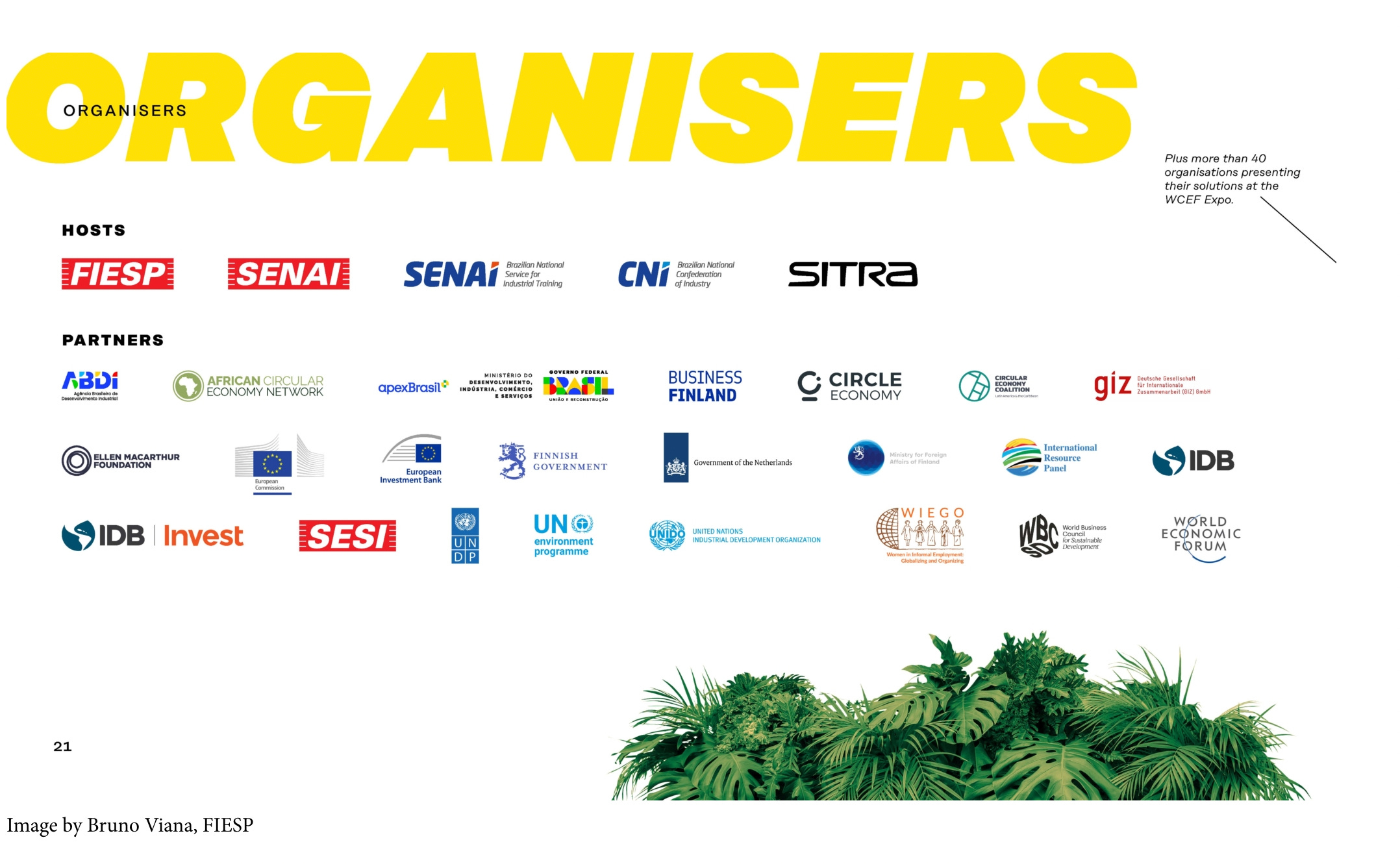
We want to acknowledge and credit Sitra, FIESP, CNI, SENAI and SENAI-SP, together with their global partners - the references, information and images are drawn from their work with our perspective.
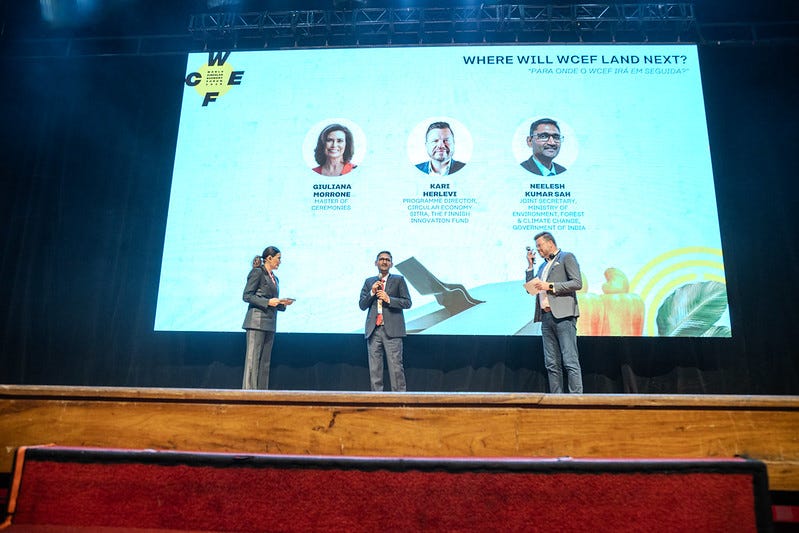
We’re excited for the next WCEF in India in Autumn 2026, under the leadership of Prime Minister Narendra Modi, who is committed to leading a nation towards a circular economy.
“Our strategy borrows from the past, operates in the present and focuses on the future. Reduce, Reuse and Recycle are the concepts woven into our life. The Circular Economy has been an integral part of our culture and lifestyle. When technology and tradition mix, the vision of life is taken further. Our planet is one but our efforts have to be many - One earth, many efforts”
Together, we can make circularity work — by nature, and by choice.